
Digital Marketing Beyond Cookies: Securing Brand Visibility in the AI-First Era
Introduction: The Shifting Sands of Digital Marketing
The impending deprecation of third-party cookies marks a fundamental shift in digital advertising and tracking. This change isn’t just a minor update; it’s reshaping how brands connect with their audiences online.
Traditional methods for understanding customer intent and targeting are diminishing, creating significant uncertainty for marketers. Relying on past tracking mechanisms will no longer be a viable long-term strategy.
However, this pivot isn’t just about privacy; it’s about a new landscape where AI-generated responses become the primary source of answers for users. Platforms like Google’s AI Overviews are changing how information is consumed.
As traditional tracking fades, appearing as an authoritative answer in AI overviews becomes paramount for brand visibility and understanding intent. Generative Engine Optimization (GEO) offers the essential framework to thrive in this new AI-driven economy.
1. The Privacy-First Tsunami: Why Third-Party Cookies Are Crumbling
What’s happening is a coordinated phase-out: Google’s deprecation of third-party cookies in Chrome, coupled with increased global privacy regulations like GDPR and CCPA. These aren’t isolated events but part of a larger trend.
The ‘why’ behind this shift is clear: consumer demand for greater privacy, mounting regulatory pressures, and browser-led initiatives to enhance user security. Users expect more control over their data.
The impact on traditional marketing is profound. Marketers face a significant loss of cross-site tracking capabilities, making retargeting and personalized ad delivery far more challenging.
This also creates difficulties in accurate audience segmentation, making it harder to reach specific groups with tailored messages. The granular insights previously available are becoming scarce.
Furthermore, traditional attribution models and campaign measurement become less reliable. Determining which touchpoints led to a conversion is no longer as straightforward.
This loss of traditional ad-tracking capabilities highlights a similar challenge in measuring AI presence, underscoring the immediate need for new approaches. The new ‘measurement chasm’ is something every `cookie-less digital marketing` strategy must address.
2. Beyond Cookies: The AI-Driven Intent Revolution
Traditional intent signals often relied on direct search queries and browsing behavior, largely enabled by third-party cookies. This gave marketers a specific lens into user interests.
Now, we’re witnessing the rise of AI Overviews, where users are increasingly turning to platforms like Google’s AI Overviews, ChatGPT, and Perplexity for direct answers. They want solutions, not just links.
AI’s approach to intent is more sophisticated: these platforms synthesize vast amounts of information to provide concise, direct answers to complex user queries. It moves beyond simple keyword matching to understand the deeper intent.
This creates a new battleground for `brand visibility AI`. Brands must now focus on becoming ‘the answer’ within these AI-generated summaries, as this is where crucial intent is being served and captured.
The strategic pivot required is clear: shifting from tracking users across sites to building content authority that AI models recognize as the definitive source. This is the foundation of a modern `AI marketing strategy`.
3. Generative Engine Optimization (GEO): Your New Compass in the Cookie-Less Sea
Defining GEO means adopting a strategic approach to ensure a brand is not only visible but also favorably represented and cited within AI-generated responses. It’s about earning your place as ‘the answer’.
GEO contrasts sharply with traditional SEO in its fundamental goals and methods. The rules of engagement have changed with generative AI.
The focus moves from broad keywords to deep intent research, understanding the specific, nuanced user queries that trigger AI answers. It’s about predicting questions, not just matching terms.
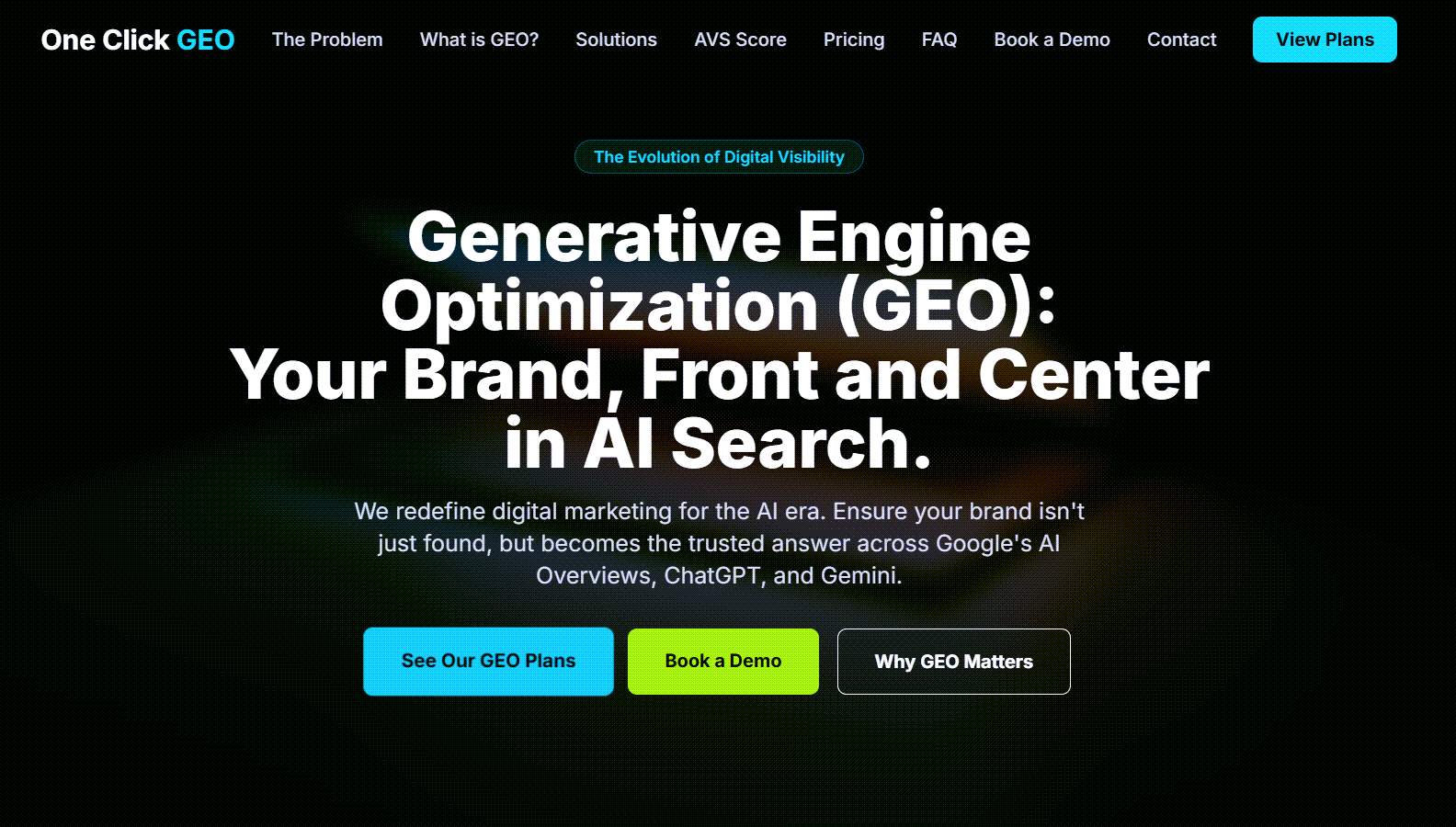
The goal shifts dramatically from merely appearing high in a list of links to being cited as ‘the answer’ by AI platforms. This is the essence of `generative search optimization`.
To achieve this, `privacy-first advertising` needs core pillars of GEO for AI visibility. These elements work together to establish an authoritative presence.
- **Deep Intent Research:** This involves going beyond traditional keywords to uncover the exact questions AI users are asking and the underlying intent behind those queries. What problems are they trying to solve?
- **Content Authority (E-E-A-T):** Building Experience, Expertise, Authoritativeness, and Trustworthiness are now critical signals for AI models. This means proving you are the go-to source.
- **Advanced Technical Optimization:** Ensuring website structure, speed, and schema markup are precisely optimized for AI crawlers and their understanding. AI needs to easily digest your information.
- **High-Quality, ‘AI-Resistant’ Content:** Creating original, comprehensive content and building a strong backlink profile to signal credibility to AI models. This content must be robust and undeniable.
4. Building Unshakeable Authority: E-E-A-T in the AI Era
Why E-E-A-T matters more than ever is simple: AI models are designed to surface the most reliable and trustworthy information. Strong E-E-A-T signals are paramount for AI acceptance.
AI algorithms interpret authority by assessing content based on the credibility of the author, the depth of expertise shown, the overall authority of the domain, and the trustworthiness of the information presented. It’s a holistic evaluation.
Practical steps for boosting `E-E-A-T content strategy` for AI are multifaceted and require a consistent effort. It’s an ongoing commitment to quality.
- **Thought Leadership:** Consistently publishing original research, insightful analyses, and expert opinions establishes your brand as a leader. Position yourself as the voice of authority.
- **Author Profiles:** Clearly highlighting the credentials and experience of your content creators lends significant credibility. Let your experts shine.
- **Data-Backed Content:** Citing reputable sources and conducting proprietary studies demonstrates a commitment to accuracy and depth. Show, don’t just tell.
- **Building Backlinks:** Earning high-quality backlinks from authoritative sites dramatically enhances your domain authority. These are votes of confidence from across the web.
- **Content Freshness and Accuracy:** Regularly updating content to ensure it remains relevant and factual signals reliability to AI models. Stale content can undermine trust.
5. Measuring What Matters: Navigating the AI Visibility Gap
The ‘Measurement Chasm’ is revisited here: AI platforms do not typically provide traditional analytics like clicks or impressions for brand citations or inclusion in AI overviews. This creates a data blind spot for marketers.
This necessitates the need for new metrics. Marketers require innovative ways to quantify their brand’s presence and influence in AI search results, beyond what traditional SEO offers.
Proprietary metrics and solutions are emerging to address this gap. These tools are designed specifically for the AI-driven landscape.
- **Generative Authority Score (GAS):** This proprietary metric provides a quantifiable measure of a brand’s visibility and influence in AI search, effectively filling the data gap for `AI overviews optimization`.
- **AI Presence Monitoring:** Actively tracking and analyzing a brand’s mentions and citations across multiple AI platforms—including Google AI Overviews, ChatGPT, and Gemini—gives a complete picture. This offers real-time insight into your `brand visibility AI`.
- **Authority Citation Building:** This involves proactive strategies to encourage AI platforms to cite client content as authoritative sources. It’s about influencing the AI, not just optimizing for it.
Finally, `reputation management` in AI is crucial. Monitoring and addressing any inaccurate or negative brand portrayals within AI-generated responses ensures favorable representation. You want AI to reflect your brand accurately and positively.
Conclusion: The Future is Generative, Are You Ready?
The demise of third-party cookies necessitates a strategic shift for all digital marketers. Simultaneously, the rise of AI overviews has created a new frontier for brand visibility and customer intent, fundamentally changing the game.
Generative Engine Optimization (GEO) is not merely an optional strategy; it is the essential framework for digital marketers to future-proof their brands. It’s about adapting to the inevitable changes of the digital world.
By prioritizing content authority, technical optimization for AI, and proactive presence management, brands can turn the privacy-first landscape into an opportunity for unmatched recognition. This challenge is also a significant opportunity.
The ultimate goal is clear: to ensure your brand consistently becomes ‘the answer’ in the new AI-driven search economy, establishing unparalleled visibility and trust. Are you ready to lead in this generative future?